Going From an A-Cup to a C-Cup: What Determines Whether It’s Possible (Plus, Before and Afters)
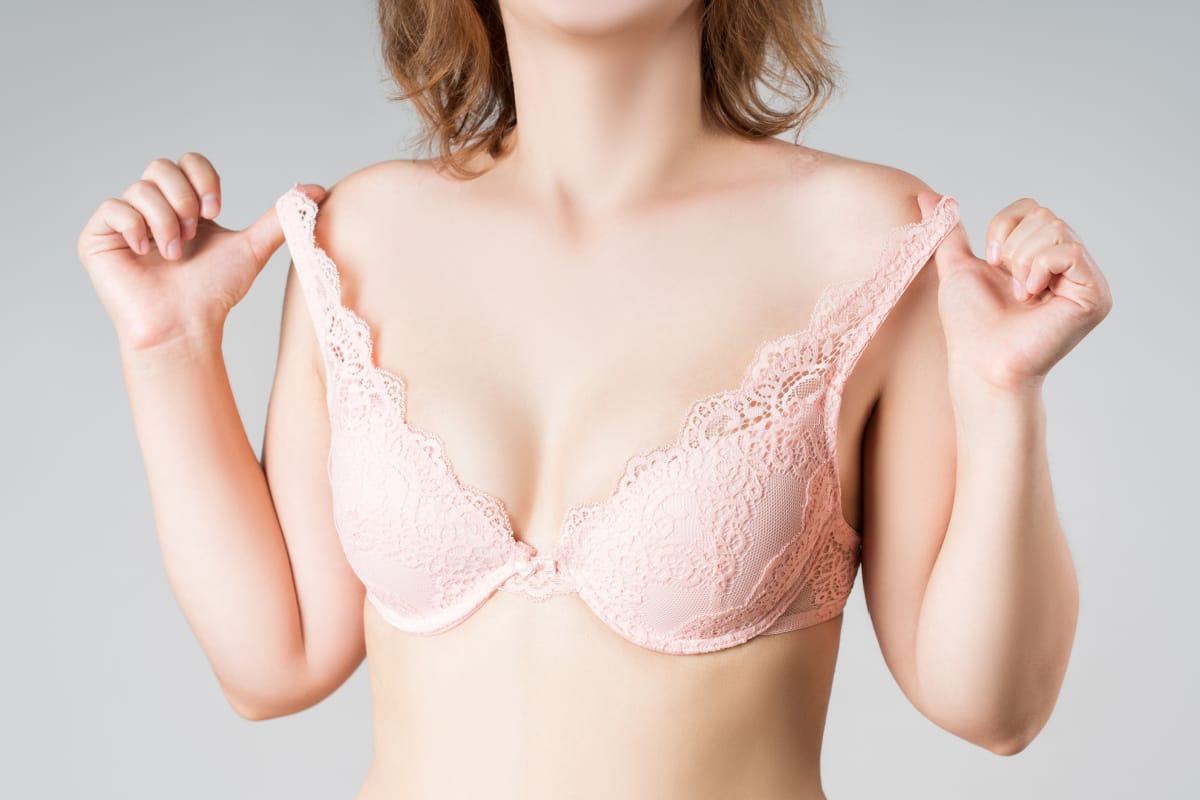
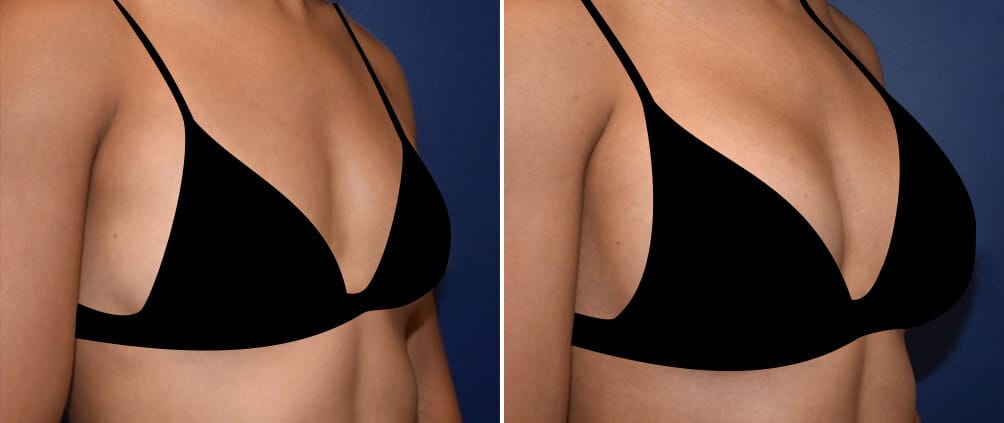
A breast augmentation patient recently came to the Mandell-Brown Plastic Surgery Center with a sub-A cup and a firm number in mind: a mid-C.
Patients often arrive with a specific size already decided, based on a saved photo, a celebrity’s surgery story, or a trending term like “ballerina breast augmentation.” Photos and trends are a useful reference point. They show a surgeon what a patient likes. But they do not show what her body can safely support, and for patients starting with very little natural breast tissue, that gap matters. Achieving a significant size increase from a very small starting point comes with its own considerations and, in some cases, its own limits.
Here, Cincinnati breast augmentation surgeon Dr. Mark Mandell-Brown explains what makes augmenting very small breasts different, and how he helps patients arrive at a goal that fits their anatomy.
Why a Specific Cup Size Isn’t Where Planning Should Start
A desired cup size describes an outcome. It says nothing about the tissue a surgeon has to work with to get there.
Two patients who both want a mid-C can need very different surgical plans. One might have more natural tissue to build on. Another might have skin that has never been stretched at all. Dr. Mandell-Brown treats a stated size as the start of a conversation, not the final answer, because the same number can mean two completely different approaches depending on your individual anatomy.
Reference photos are useful for identifying a look a patient likes. They cannot show what her chest wall, skin, and existing tissue will allow, and that is the piece only an exam can answer.
Celebrity stories and trends like “ballerina breast augmentation” tend to chase a cookie-cutter number rather than a natural result.
The First Step: Establishing a Patient’s True Starting Point
Before talking implant size, Dr. Mandell-Brown wants to know what a patient’s breasts have looked like over the years, not just in the exam room that day. Breast tissue changes with:
- Pregnancy and breastfeeding
- Significant weight loss or gain
- Hormonal shifts and aging
- A patient’s genetics and natural body composition
A patient who has always had very little natural volume is a different case than a patient whose tissue was reduced by pregnancy or weight loss after once having more to work with. The second patient’s skin has already stretched and contracted once, and that history changes how it may respond to an implant. The first patient’s skin has never had to expand at all, which is its own consideration entirely.
Dr. Mandell-Brown asks about this directly in consultation. A cup size alone does not explain what a patient’s tissue can support. Read more about how he approaches these early conversations in our blog about why he assigns breast augmentation “homework.”
Why Very Small Breasts Present Unique Surgical Challenges
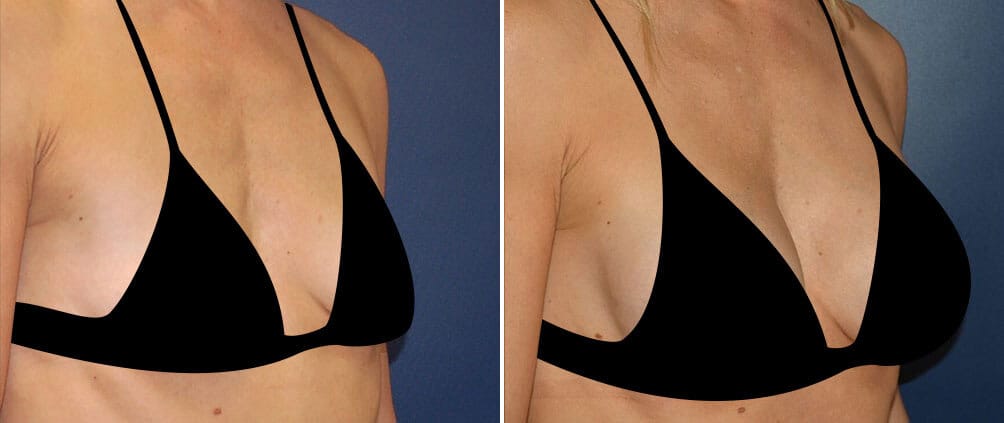
Augmenting an A-cup or smaller breast to a significantly larger size involves more than selecting a bigger implant. Several factors specific to starting with minimal breast tissue come into play:
Limited soft tissue coverage
With very little natural breast tissue, there is less padding between the implant and the skin. This increases the risk of visible implant edges or rippling, particularly along the upper pole and cleavage, where tissue tends to be thinnest to begin with.
Skin and tissue elasticity
Skin that has never expanded before, whether from pregnancy, weight gain, or a prior augmentation, often resists stretching more than skin that has expanded and settled in the past. Moving from an A-cup to a mid-C asks a lot of that tissue, and how well it responds varies from patient to patient.
Implant size relative to frame
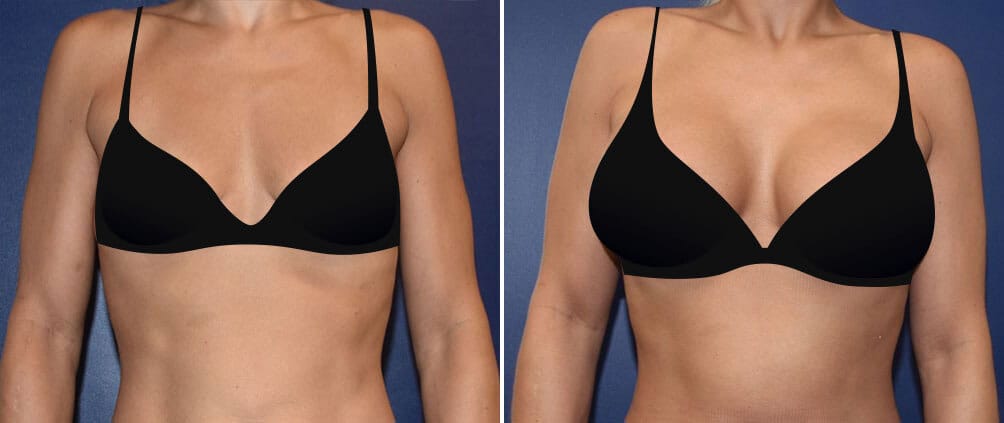
A significant increase on a very small frame changes how the entire chest looks, not only the breasts themselves. Dr. Mandell-Brown evaluates chest width, shoulder width, and overall body proportion to determine what will look balanced on that particular frame.
Placement decisions matter more
Submuscular placement, positioning the implant beneath the chest muscle, typically gives better coverage and a more gradual slope for patients with minimal tissue. That coverage helps keep the implant’s edges from showing. For a patient with more tissue to begin with, subglandular placement might work just as well. For a very small-breasted patient pursuing a large increase, there are fewer equally good options.
How Dr. Mandell-Brown Approaches Your Consultation
Rather than starting from a desired cup size and working backward, Dr. Mandell-Brown starts from the patient’s tissue and builds a plan around what it can safely and attractively support.
This typically includes:
- A physical exam assessing skin elasticity, existing tissue volume, and chest wall anatomy
- A detailed history of how the patient’s breasts have changed over time
- A conversation about implant size in cubic centimeters (CCs) rather than cup size alone, since cup size varies between bra brands and does not translate predictably to implant volume
- Trying on sizers during consultation so the patient can see and feel how different volumes sit on her specific frame
- An honest conversation about what her tissue can support without compromising long-term results
The right combination of implant type, size, and placement varies by patient. A narrow chest with very little natural tissue calls for different decisions than a slightly broader frame with the same starting cup size, and Dr. Mandell-Brown tailors implant profile, incision location, and placement to each patient’s specific anatomy rather than applying the same approach across every small-breasted patient. That individualized planning is what allows for a proportionate, natural-looking result in a single procedure, even for patients starting with very little natural volume.
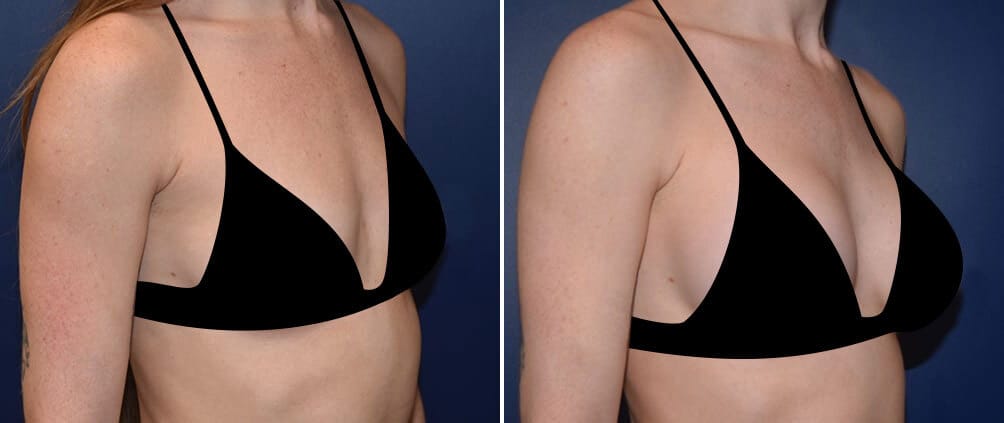
What This Means If You’re Set on a Specific Size
Photos, celebrity stories, and trending terms are each a normal part of what patients bring with them to a consultation, and they are a fine starting point. What changes the plan is the exam. Chest wall width, skin elasticity, and existing tissue determine what size will actually look proportionate and hold up over time, regardless of what a patient walked in wanting.
If you are starting from an A-cup or smaller and hoping for a substantial increase, come prepared to talk through your own history, not just your target size. A surgeon who agrees to any number without examining your tissue first is not doing you a favor, no matter how confident that makes you feel in the consultation.
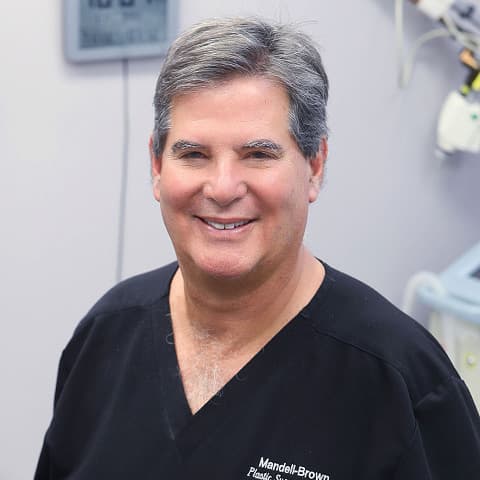
Dr. Mark Mandell-Brown
Dr. Mandell Brown is a nationally recognized, triple board-certified cosmetic surgeon with over 30 years of experience performing facial, breast, and body procedures. Known for his Natural Look™ cosmetic surgery results, Dr. Mandell-Brown has the credentials and aesthetic eye to precisely tailor your procedure and safely achieve the results you desire.


Curious what’s realistic for your own anatomy? Schedule a consultation with Dr. Mark Mandell-Brown to discuss your goals and find out what implant options are the best fit for you. Call (513) 984-4700 (Cincinnati) or (937) 260-4405 (Springboro), or contact us online to get started.