6 Top Procedures for Sagging Skin After Weight Loss
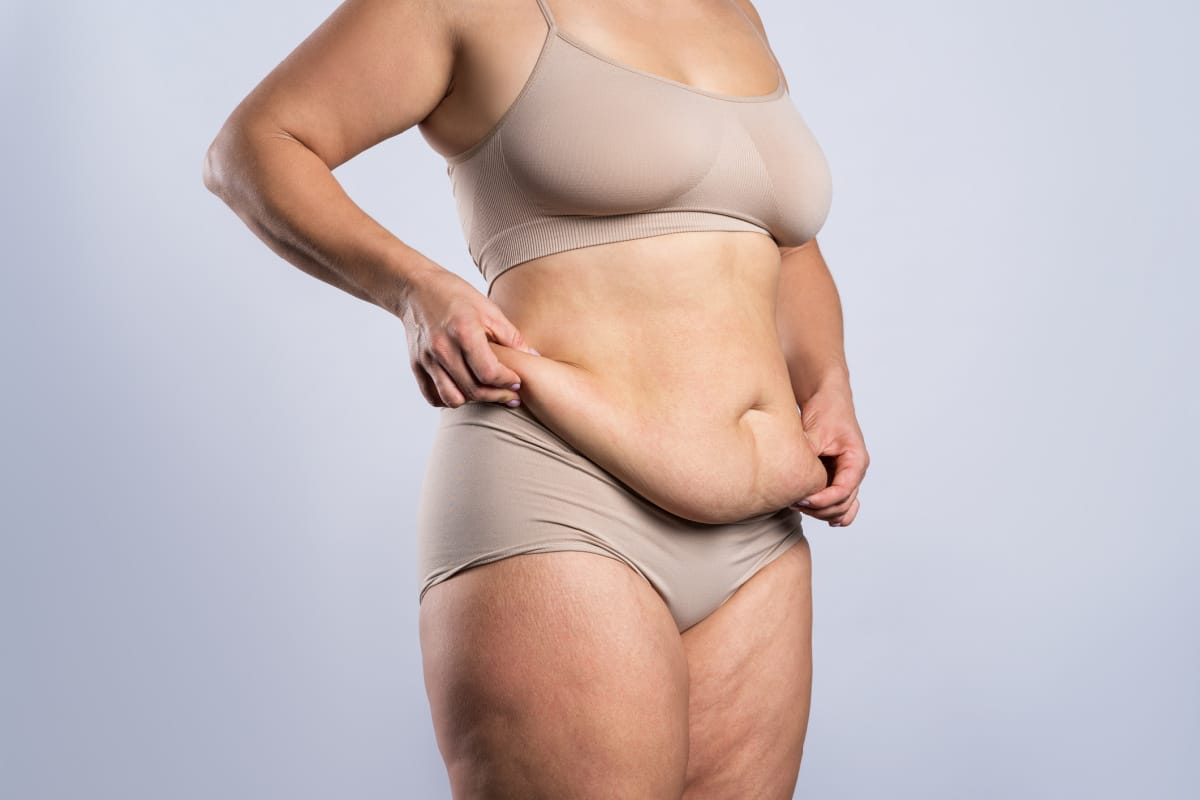
Losing 50, 100, or more pounds changes your body in almost every way but one: the skin that stretched to hold that weight rarely shrinks back down on its own. Sagging skin after weight loss shows up across the stomach, upper arms, thighs, and face, and no amount of additional diet or exercise tightens it once the underlying collagen and elastin have been stretched past their limit.
Cincinnati cosmetic surgeon Dr. Mark Mandell-Brown has spent more than 30 years helping patients find the right combination of body contouring procedures for their anatomy. His post-weight loss patients arrive after bariatric surgery, GLP-1 medications, and years of disciplined diet and exercise alike. Here are the six procedures he turns to most often for patients dealing with loose, sagging skin after significant weight loss.
Facelift
Major weight loss often shows up first in the face, where lost volume leaves the cheeks hollow and the jawline and neck loose. Dr. Mandell-Brown’s facelift tightens the underlying muscle layer, removes excess fat through targeted liposuction, and redrapes the skin for a rested result rather than an overdone one, the Natural Look™ he’s known for. He also customizes the incision to each patient’s own hairline instead of using one standard approach for everyone. Most patients take one to two weeks off work to recover.
Breast Lift (Mastopexy)
Significant weight loss often leaves the breasts smaller and lower on the chest wall, since the volume that once filled and supported them is gone. A breast lift repositions the breast tissue higher on the chest and removes excess stretched skin. For patients who want more volume back, not just a higher position, Dr. Mandell-Brown combines the lift with a breast augmentation in the same surgery. Most women return to work within a couple of weeks, though final results settle in over about three months as swelling resolves.
Arm Lift (Brachioplasty)
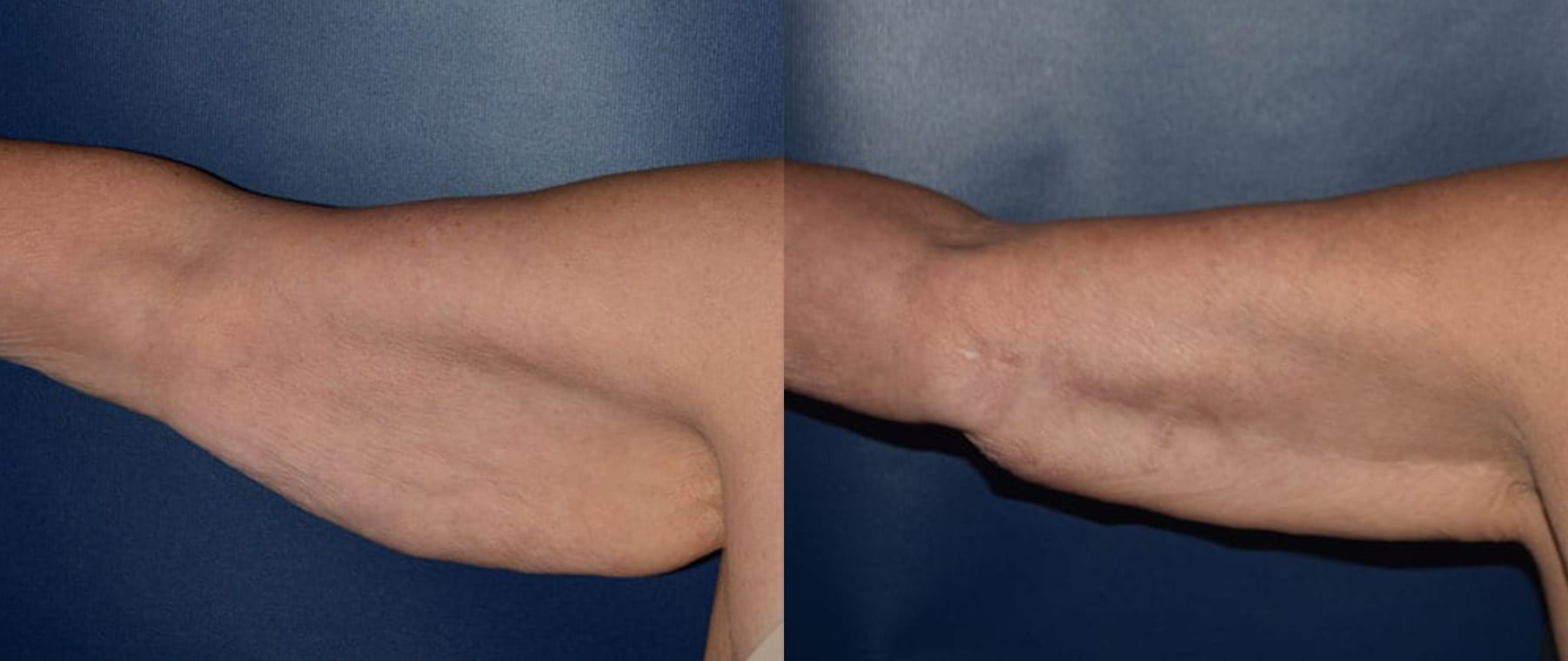
Loose skin under the upper arms, sometimes called “batwings” or “bingo wings,” is one of the most visible signs of major weight loss and one of the least responsive to exercise. Sagging skin on the arms after GLP-1s is especially common, since the upper arms lose volume quickly on these medications and have little muscle underneath to hold the skin taut once that volume is gone. For patients with significant skin laxity, Dr. Mandell-Brown performs an arm lift through an incision from the armpit to the elbow, removing the excess skin and tightening the remaining tissue for a firmer contour. Recovery runs about one to two weeks before returning to normal activity, and rigorous arm use stays off-limits for four to eight weeks while the incision fully heals.
Tummy Tuck (Abdominoplasty)
The abdomen carries the brunt of major weight change, and stretched or separated abdominal muscles combined with loose skin rarely resolve on their own. A tummy tuck removes the excess skin and fat, repairs the separated muscles, and recreates a natural-looking navel, a detail Dr. Mandell-Brown spends significant time on during every procedure. Drains typically come out within about a week, and most patients return to light activity within one to two weeks, with six weeks recommended before resuming intense exercise or heavy lifting.
Fleur-de-lis Tummy Tuck: For Massive Weight Loss
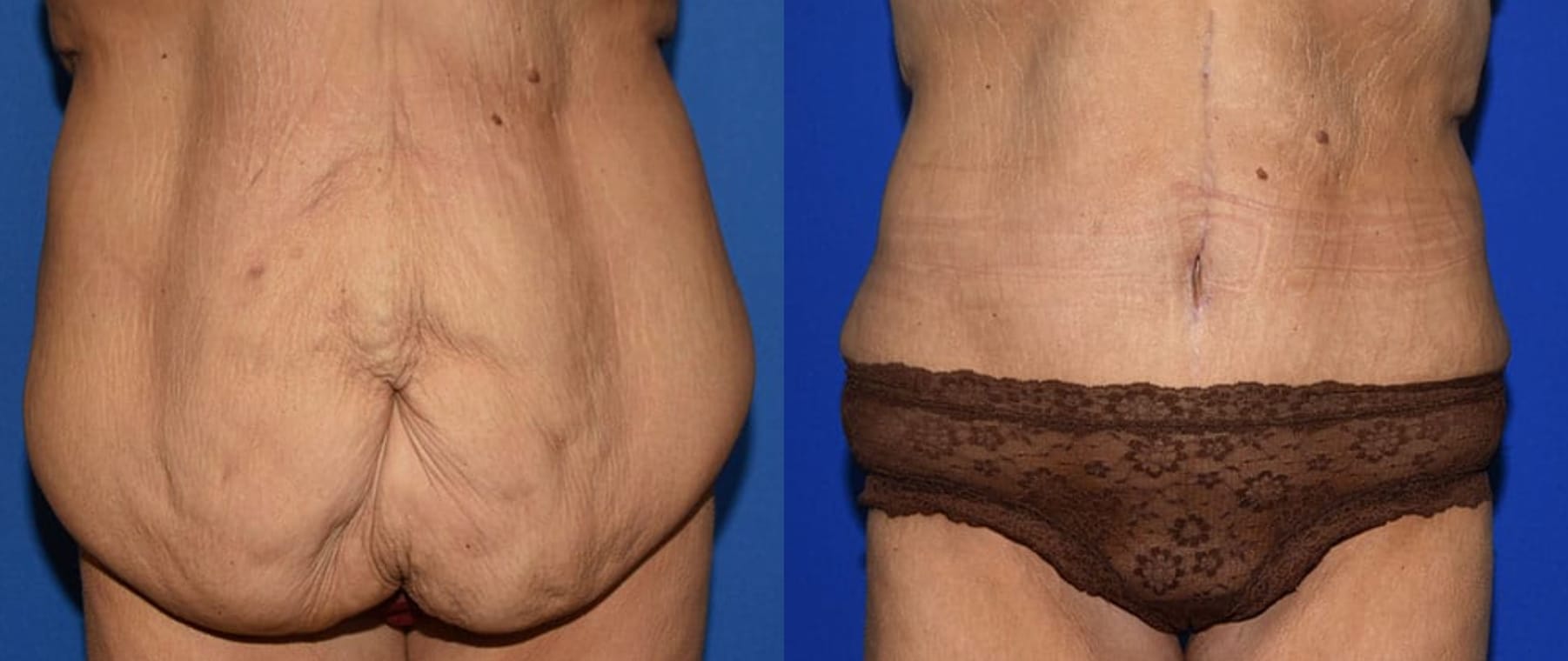
For those who have undergone massive weight loss, a vertical and horizontal skin tightening can be helpful. This inverted “T” technique is known as a fleur-de-lis tummy tuck. Dr Mandell-Brown performs this procedure to improve the muscle laxity and excess skin. See the before and after below:
Thigh Lift (Thighplasty)
Significant weight loss frequently leaves excess, sometimes dimpled skin along the inner and outer thighs that liposuction alone cannot correct. Dr. Mandell-Brown places his thigh lift incision in the groin and buttock crease rather than running it down the leg, so patients can wear shorts without a visible scar. Most patients return to work in seven to ten days, and compression hose worn during the first week help control swelling and reduce the risk of blood clots.
Belt Lift (Lower Body Lift)
For patients whose skin laxity wraps all the way around the midsection, addressing the abdomen alone isn’t enough. A belt lift, also called a circumferential body lift or belt lipectomy, removes excess skin and fat around the entire midsection in one procedure. In some cases, Dr. Mandell-Brown also tightens the underlying abdominal muscles as part of the same surgery, for patients whose muscles have separated (a condition called diastasis recti).
What a Belt Lift Addresses
A belt lift treats the abdomen, hips, lower back, and buttocks together, so it’s the procedure Dr. Mandell-Brown reaches for when skin laxity isn’t confined to one area. Because a belt lift is the most extensive of the six procedures here, Dr. Mandell-Brown schedules it as a second surgery for patients who also need a tummy tuck or liposuction, months after the first operation rather than combining everything into one long procedure. One of his own thigh lift patients followed exactly this path: a tummy tuck first, then a belt lift, flank and back liposuction, and a medial thigh lift six months later, once she had fully healed from the first surgery.
A 2012 patient outcomes study covered by the American Society of Plastic Surgeons followed 33 body contouring patients after bariatric surgery and found that all but one said they would have the surgery again, describing it as an important step in their recovery.[1]
Recovery, Procedure by Procedure
- Facelift: 5–10 days (Dr. Mandell-Brown also offers a 2-3 day recovery “quick” facelift)
- Breast Lift (Mastopexy): 7–14 days
- Arm Lift (Brachioplasty): 7–14 days
- Tummy Tuck (Abdominoplasty): 8–14 days
- Thigh Lift (Thighplasty): back to work in 7–10 days, full recovery 2–6 weeks
- Belt Lift (Lower Body Lift): 10–14 days initial recovery, several weeks to full recovery, often staged as a separate second surgery
Frequently Asked Questions
Before & After Gallery
Dr. Mandell-Brown uses advanced techniques to provide natural-looking outcomes. See the results for yourself in our patient gallery.
If sagging skin after weight loss is affecting how you feel in your own body, schedule a consultation with Dr. Mark Mandell-Brown at the Mandell-Brown Plastic Surgery Center to find out which of these procedures, or which combination, fits your anatomy and your goals. Call (513) 984-4700 (Cincinnati) or (937) 260-4405 (Springboro), or contact us online. Dr. Mandell-Brown serves patients throughout Cincinnati, Springboro, and Dayton, Ohio.
References »
- American Society of Plastic Surgeons. “Body Contouring Brings Lasting Improvement in Quality of Life after Weight-Loss Surgery.” November 8, 2012.
- “Soft Tissue Facial Changes Following Massive Weight Loss Secondary to Medical and Surgical Bariatric Interventions: A Systematic Review.” Aesthetic Surgery Journal Open Forum, 2024.