Chemical Peels: What to Do Before and Avoid After
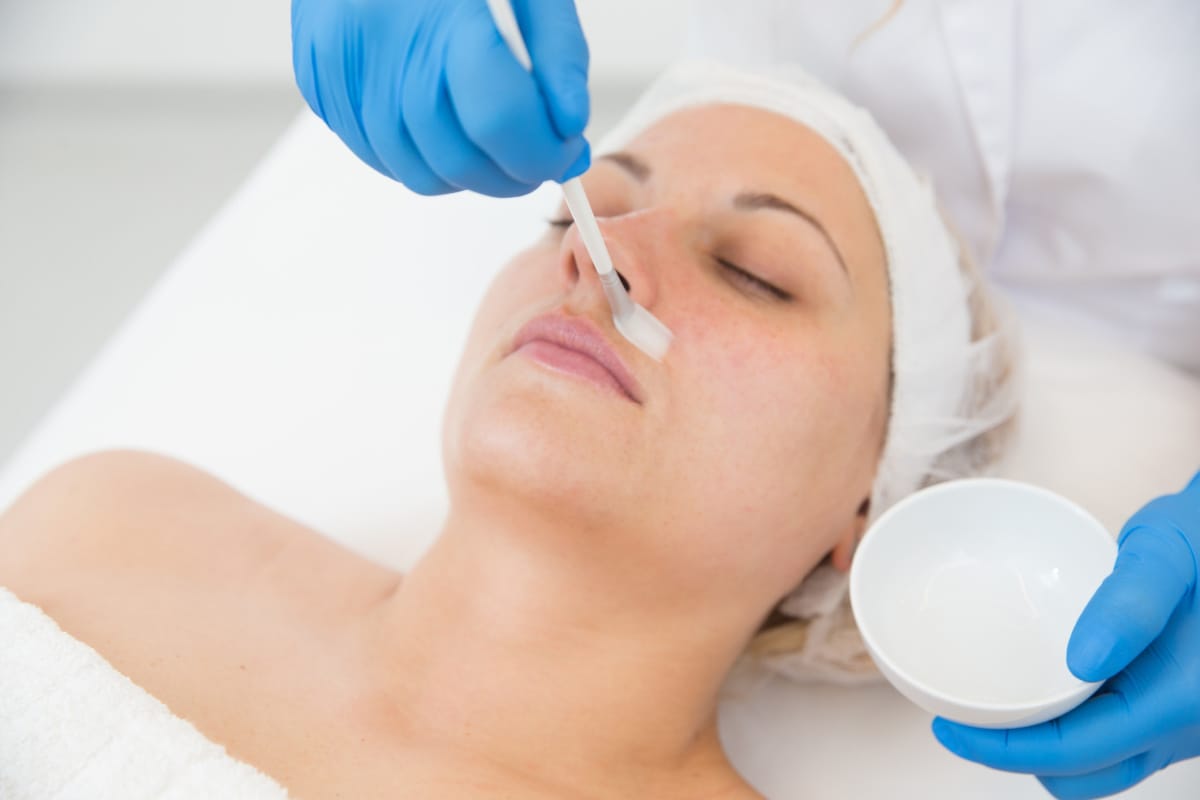
A Cincinnati chemical peel can improve sun damage and even out tone, but the right chemical peel before and after care is what gets you there, and it looks different depending on the strength you choose. Triple board-certified Cincinnati plastic surgeon Dr. Mark Mandell-Brown has spent more than 30 years fine-tuning that process for his patients: what to do the week before a chemical peel, and what to leave alone once you’re home.
What to know before your chemical peel
The stronger the peel, the more prep it takes. We ask every peel patient to:
- Stay out of unprotected sun exposure in the days leading up to treatment
- Stop hair removal, hair dye, perms, and facial scrubs about one week out
- Skip shaving the treatment area for 24 hours before the appointment
- Arrive with clean skin: no makeup, no sunscreen
- Mention any history of cold sores. For a phenol peel, published guidance recommends starting an antiviral one to two days beforehand
- Stop Retin-A products one week before peel
- Inform your doctor if you have been on Accutane in the past 6 months
What a TCA or phenol peel feels like
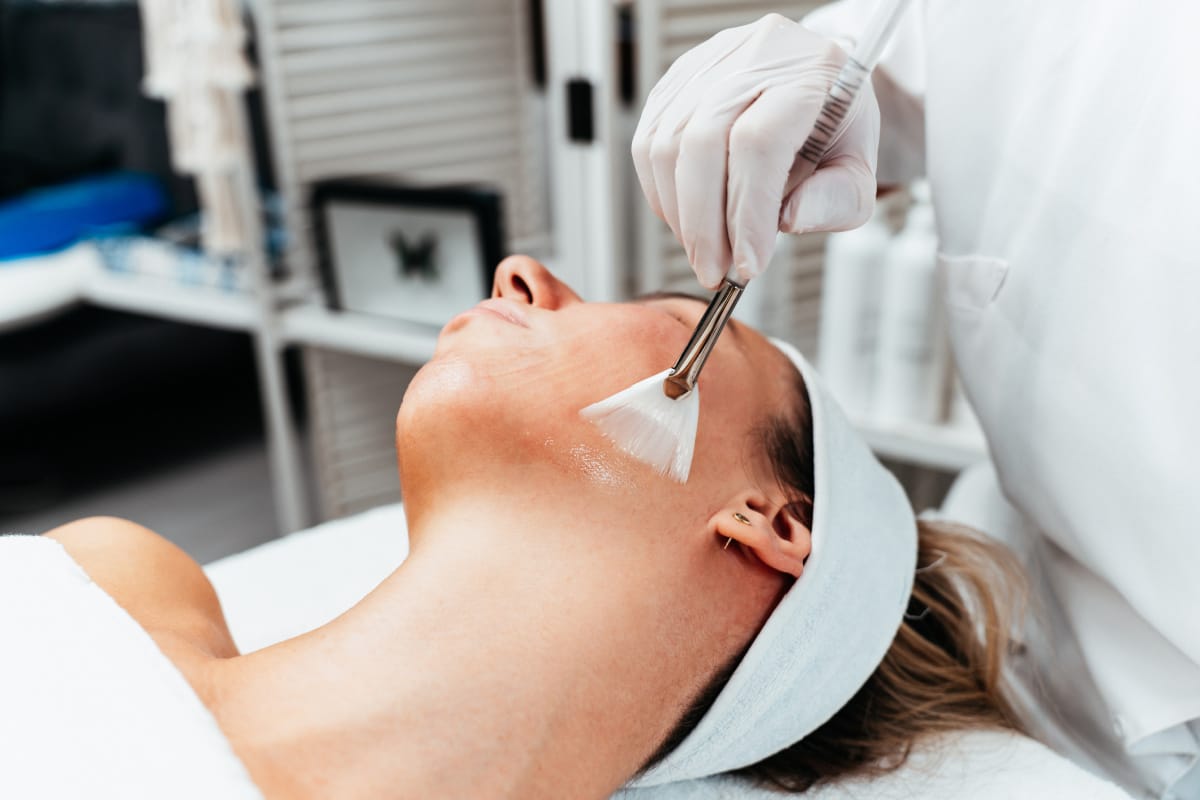
Dr. Mandell-Brown performs every TCA and phenol peel himself, reviewing your medical history and skin type at consultation to choose the right strength and formula for you. He brushes the TCA solution onto the skin, and the treated skin visibly whitens (a process called frosting) as the acid takes effect. Expect a mild burning sensation during application that eases as the frosting completes.
Chemical peel recovery by strength
We sort peels into three tiers by strength, and each tier recovers on its own timeline.
Light: mild peels, no downtime
Glycolic, pyruvic, and micropeel treatments carry little to no downtime and can be used frequently for maintenance. These mild treatments smooth texture and encourage collagen production, keeping fine lines and the occasional blemish in check between stronger sessions.
Medium: TCA peels, three to seven days
The TCA peel comes in 15%, 25%, and 35% strengths and treats blotchy skin, wrinkles, and texture. Redness and light peeling typically run three to seven days, with most of the visible redness fading within a week. Dr. Mandell-Brown can repeat a TCA peel three to four times a year.

“I originally had a consultation for surgery under my eyes. Instead of steering me in that direction, Dr. Mandell-Brown suggested we try a TCA peel first. I’m so glad I went with his recommendation! My under eye area looks 100% better without the cost or invasive surgery. He didn’t try to sell me something I didn’t need and that really made me trust him.”
Heavy: phenol peels, four to twelve weeks
The phenol peel is the deepest peel we offer, reserved for significant sun damage and aged skin. Recovery runs the longest of any peel here: redness lasts four to twelve weeks, though most patients can wear makeup again after seven to eight days. Because of the recovery involved, Dr. Mandell-Brown performs a phenol peel only once or twice in a patient’s lifetime.
What to avoid after your chemical peel
The first 48 hours after a peel
Right after a TCA or phenol peel, expect redness and swelling along with some stinging. Dr. Mandell-Brown may recommend a soothing ointment, ice packs, or an over-the-counter pain reliever like ibuprofen for discomfort; follow whatever specific aftercare instructions you’re given. Although it may be tempting to do so, avoid touching or picking at the treated skin, and skip strenuous exercise and heavy sweating for the first couple of days.
The weeks after your treatment
With a phenol peel, the treated skin may crust before the fresh skin underneath fully appears; a TCA peel typically just flakes and peels as it heals. The new skin will be more sensitive to UV rays than usual, so daily sunscreen is non-negotiable while you heal. We strongly advise avoiding direct sun and using sunblock for several months while the new skin layer matures. Skip retinoids, exfoliating acids, and any other active skincare on the treated area until you are cleared to resume using them.
Possible risks and side effects
As with any medium-depth Dayton chemical peel, TCA carries the possibility of changes in skin pigment and, rarely, scarring. Phenol, our deepest peel, carries similar risks along with a longer healing process, plus a risk of HSV reactivation and infection at the treatment site in patients with a history of cold sores. Like all medical treatments, chemical peels carry certain risks, which is why it’s important to choose an experienced provider like Dr. Mandell-Brown. Dr. Mandell-Brown reviews your medical history at consultation to help determine whether a peel is the right fit, and results vary from patient to patient.
Combining chemical peels with other treatments
Some patients want to cover more ground in one visit and ask about pairing a chemical peel with a second treatment. DiamondGlow® is a hydrating, no-downtime treatment, and Secret RF is radiofrequency microneedling for texture and fine lines. Ask Dr. Mandell-Brown at consultation whether combining either one with your peel fits your goals.
Frequently asked questions
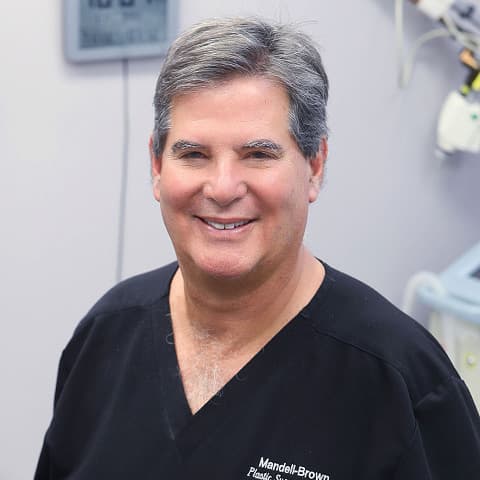
Dr. Mark Mandell-Brown
Dr. Mandell Brown is a nationally recognized, triple board-certified cosmetic surgeon with over 30 years of experience performing facial, breast, and body procedures. Known for his Natural Look™ cosmetic surgery results, Dr. Mandell-Brown has the credentials and aesthetic eye to precisely tailor your procedure and safely achieve the results you desire.


Fall is the perfect time to try a chemical peel. Dr. Mandell-Brown can help you choose the right peel strength and build a recovery plan around your goals—the same Natural Look™ philosophy he’s built the practice on for more than 30 years: look better but not different. Schedule a consultation with Dr. Mandell-Brown at the Mandell-Brown Plastic Surgery Center, or learn more about our facial peels. Call (513) 984-4700 in Cincinnati and Dayton or (937) 260-4405 in Springboro.
Areas Served
References »
- Soleymani, T., Lanoue, J., & Rahman, Z. (2018). “A practical approach to chemical peels: A review of fundamentals and step-by-step algorithmic protocol for treatment.” Journal of Clinical and Aesthetic Dermatology, 11(8), 21–28.
- Mayo Clinic Staff. “Chemical peel.” Mayo Clinic, March 13, 2024.