Mommy Makeover Safety: Why Long Surgeries and Empty Recovery Rooms Are Both Red Flags

In February 2026, an Ohio mother of three documented her mommy makeover journey on TikTok to tens of thousands of followers. She was 47, excited, and healthy. Her surgery lasted nine hours. She never made it home.
According to news reports, Rachel Tussey died on March 17, 2026 after suffering a catastrophic complication in the post-operative recovery unit. Her case likely reflects two distinct failures that patients rarely think to ask about: a surgery that ran far too long, and a surgeon who left the facility before the patient was discharged. In Dr. Mandell-Brown’s view, either one of those failures is unacceptable on its own. Together, they are a tragedy that was likely preventable.
Dr. Mark Mandell-Brown has been performing cosmetic surgery in Cincinnati for over 35 years. He has served on the Board of Trustees for AAAHC (the Accreditation Association for Ambulatory Health Care, the largest organization that sets safety standards for surgery centers nationwide) and has conducted on-site facility inspections as an AAAHC surveyor since 2004. He has seen what careful surgical practice looks like, where it can fall short.
His perspective on long combination surgeries is this: doing too much in a single session is a risk patients rarely think to ask about, and one that surgeons should discuss with patients ahead of time.
What Makes a Long Surgery Dangerous
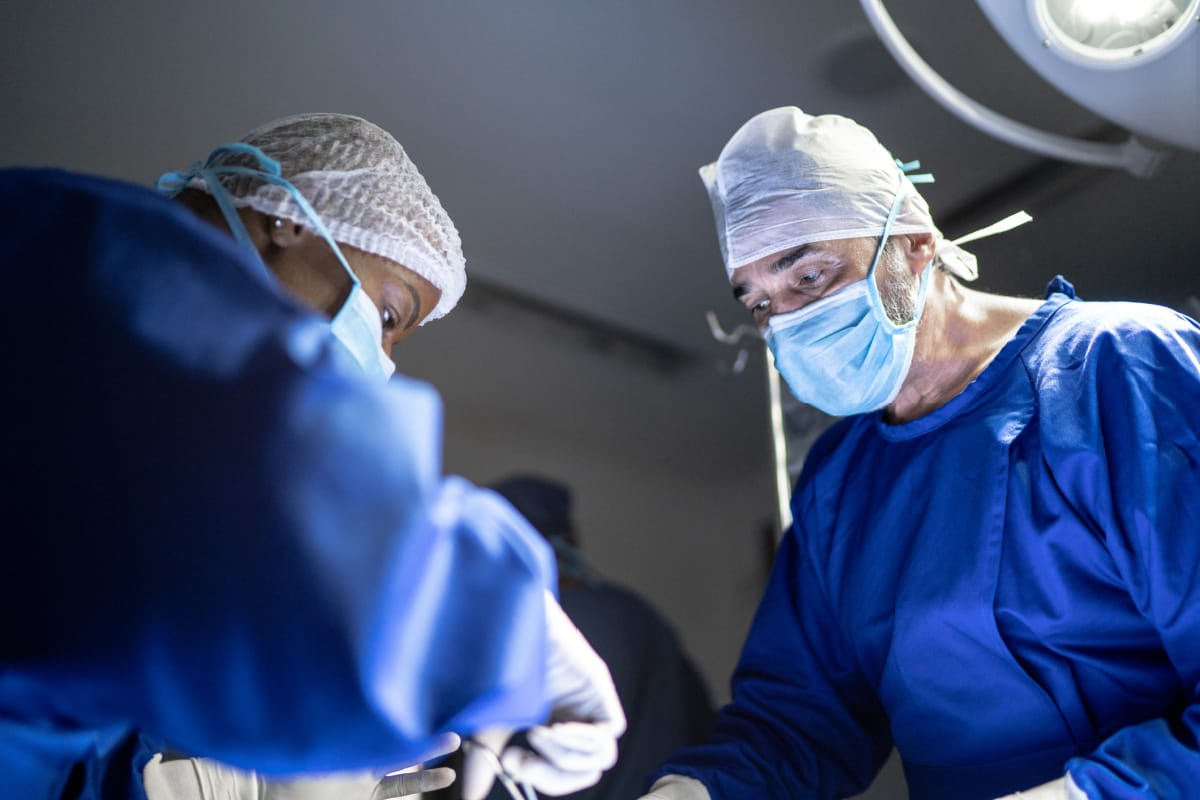
A mommy makeover is not a single procedure. It typically combines a tummy tuck, breast surgery (breast augmentation, lift, or both), and liposuction, each a substantial surgery on its own. Performed together, the physical demands on the body stack up fast.
Operating time is one of the clearest predictors of surgical risk. Anesthesia exposure increases with every hour in the OR, and so does the risk of complications including blood clots, fluid imbalance, and cardiovascular stress. A tummy tuck alone runs two to three hours. Add breast surgery and liposuction, and surgery may last well past five or six hours, sometimes more.
The body’s capacity to manage blood loss, regulate fluids, and sustain a healing response has limits. Combining procedures stacks those demands simultaneously rather than sequentially, and the longer the surgery runs, the less margin exists if something goes wrong.
Combination procedures are not the problem. Performing a tummy tuck and breast augmentation together, for instance, is common, well-studied, and right for many patients. The concern is with surgeries that run long enough to erode that margin, and with practices that treat a packed schedule as a selling point rather than a warning sign.
What Staging Actually Means
Staging means dividing an extensive surgical plan across two or more separate procedures, each intentionally planned within a safe operative window. Several procedures to achieve your intended goals is not a sign that the first surgery fell short; it is typically a plan that was designed thoughtfully from the start.
A patient who wants a tummy tuck, breast lift, augmentation, and significant liposuction might complete the abdominal work in one session and the breast procedures in a second, typically scheduled six to twelve months later. Each session stays within a manageable time frame, the body heals before it is asked to heal again, and the surgical team works on a patient who is not already hours into anesthesia.
The second recovery period is an inconvenience. That is worth saying plainly. But results are not compromised by staging. The outcome of two well-executed, appropriately scoped surgeries is the same, or better, than one overlong session pushed to the outer limits of safe operating time.
- Related reading: Dr. Mandell-Brown wrote more about staging procedures in his blog post, Revision Surgery: When and Why You Might Need a Second Procedure
How Dr. Mandell-Brown Approaches Combination Procedures
At the Mandell-Brown Plastic Surgery Center, procedures that would push total operative time beyond a safe window are staged into multiple operations. Dr. Mandell-Brown uses five hours of operating time as his threshold, and any surgical plan that would exceed five hours becomes a conversation about sequencing rather than a single booking.
Beware of any surgeon who recommends performing a full mommy makeover in one session when the operating time would exceed four to five hours. A second recovery period may be inconvenient, but it is far safer than asking your body to endure too much at once.
Three factors shape that conversation at a consultation:
- The scope of the surgical plan. A tummy tuck with breast augmentation is a different undertaking than a tummy tuck, breast lift with augmentation, and large-volume liposuction.
- The patient’s health and healing capacity. Body weight, cardiovascular health, and individual medical history all affect how well a patient tolerates extended anesthesia.
- What can be accomplished well—not just accomplished. Surgical quality does not improve as operative hours accumulate.
Because Dr. Mandell-Brown owns and operates his own state-licensed AAAHC-accredited surgery center, he controls the scheduling, the protocols, and the standards of care without exception.
Safety Does Not End When Surgery Does
The Rachel Tussey case is a sobering reminder that post-operative care carries its own risks. Her surgery ended. Her surgeon left. Either the surgeon or anesthesia provider or both should remain in the surgery facility until the patient is discharged.
At the Mandell-Brown Plastic Surgery Center, Dr. Mandell-Brown remains in the facility until every patient has been discharged. He does not hand off to staff and leave. This is not universal among surgeons who operate in third-party outpatient centers, and it is a question worth asking directly before you book.
The nursing staff carry over 20 years of hospital-trained experience and every team member, including Dr. Mandell-Brown, holds current Advanced Cardiac Life Support (ACLS) certification. Anesthesia is administered exclusively by hospital-experienced anesthetists, for both general anesthesia and IV sedation. The facility sits two blocks from Bethesda North Hospital, so that should any medical event occur, hospital-level care is immediately accessible.
Those are not details to gloss over when choosing where to have surgery.
Questions to Ask Before Scheduling a Combination Procedure
Patients researching mommy makeovers tend to ask about results, recovery timelines, and cost. Fewer ask about surgical duration and what happens once the procedure ends. These questions are worth asking directly to your surgeon:
- “How long will this surgery take?” Get a specific estimate, not a range wide enough to span an afternoon.
- “If the plan is extensive, would you recommend staging?” A surgeon who is never willing to stage, regardless of scope, is prioritizing a single appointment over your safety.
- “Who will be present when I wake up, and through my recovery?” Ask whether the surgeon remains on-site through discharge, or whether post-operative care transfers to facility staff once the procedure is done.
- “Where is the surgery being performed, and who owns that facility?” An accredited, surgeon-owned center is not the same as a third-party outpatient facility. Standards, oversight, and accountability differ.
There is no single right answer to how a mommy makeover should be structured. Every patient’s anatomy, goals, and health profile are different. What cannot vary is the honesty of the conversation, and a surgeon willing to recommend a second surgery date when the alternative is asking your body to do too much at once.
Dr. Mark Mandell-Brown
Dr. Mandell Brown is a nationally recognized, triple board-certified cosmetic surgeon with over 30 years of experience performing facial, breast, and body procedures. Known for his Natural Look™ cosmetic surgery results, Dr. Mandell-Brown has the credentials and aesthetic eye to precisely tailor your procedure and safely achieve the results you desire.
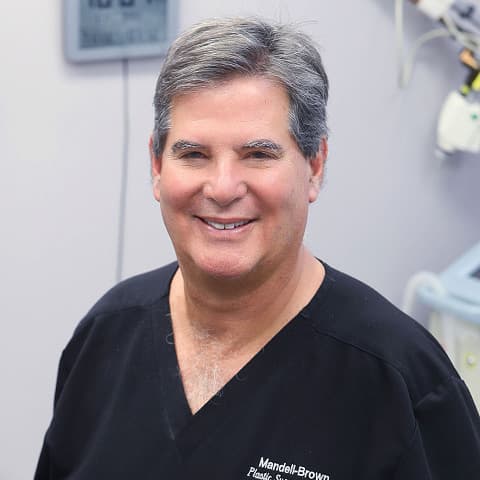
Dr. Mark Mandell-Brown is a triple board-certified cosmetic surgeon with over 35 years of experience performing combination body procedures in Cincinnati and Springboro, Ohio. He is one of only five surgeons in the country to have served as both President of the American Academy of Cosmetic Surgery and on the Board of Trustees for AAAHC.To discuss your goals and what a safe surgical plan looks like for you, call (513) 984-4700 (Cincinnati) or (937) 260-4405 (Springboro), or schedule a consultation online. Dr. Mandell-Brown serves patients throughout Cincinnati, Springboro, and Dayton, Ohio.